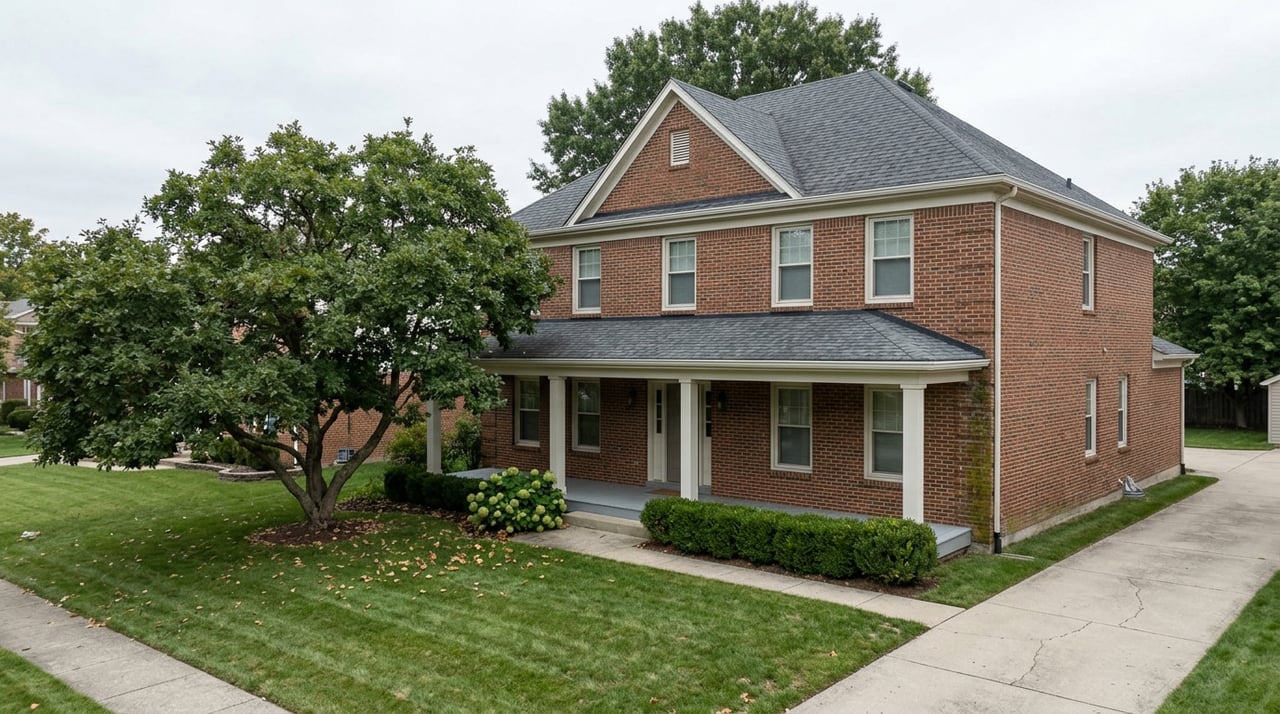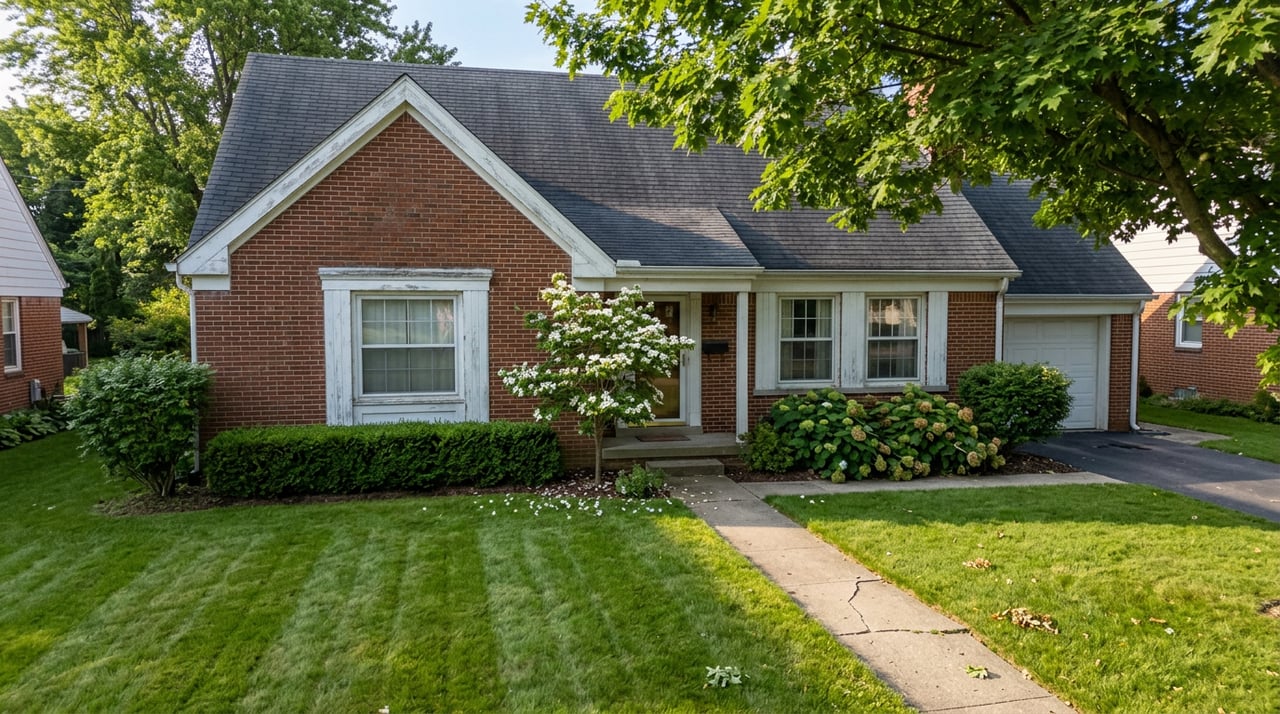
Half a mile and an interstate overpass separate Fourth & Gill from Old North Knoxville, and on paper the two neighborhoods are nearly interchangeable. Both were platted as streetcar suburbs in the last two decades of the 1800s. Both are protected by the city's H-1 historic overlay, which means an owner in either district needs a Certificate of Appropriateness before touching a window, a roofline, or a porch rail. Both are full of Queen Anne, Craftsman, and Colonial Revival houses, some of them attributed to the same Knoxville architects. And yet a house in Fourth & Gill is trading for roughly two and a half times what a comparable house sells for in Old North. If you're comparing Knoxville's historic districts as a relocation buyer, that gap is the thing worth understanding before you fall for either one on curb appeal alone.
The Same Rule Book, Adopted Twice
Old North Knoxville's historic overlay dates to 1992, the same year its National Register nomination went through, with the neighborhood's own design guidelines finalized in 2003. Fourth & Gill's H-1 overlay followed in 1999. Functionally the two districts operate under the same review process: an exterior project gets classified by level of impact, goes in front of the Knoxville-Knox County Historic Zoning Commission, and comes back with a Certificate of Appropriateness before a building permit is issued. Neither overlay touches interior renovations, paint colors, or landscaping. Both are enforced against the same standard, the Secretary of the Interior's Standards for Rehabilitation.
The overlay has already proven its worth in Fourth & Gill once. When TDOT's SmartFix40 project rebuilt the interstate through downtown in the mid-2000s, the historic designation helped keep the row of houses along Eleanor Street from being cleared for construction. That's not a footnote. It's the reason the district still has a continuous historic streetscape instead of a gap where I-40 widened.
If you're weighing a purchase in either neighborhood, the overlay status of a specific address is a five-minute check, not a guess. Knox County's KGIS mapping tool lets you pull up any parcel and confirm its zoning overlay before you write an offer, and both the Fourth & Gill Neighborhood Organization and Historic Old North Knoxville publish their own guidance on what a Certificate of Appropriateness actually covers.
What the Numbers Say, and Where They Disagree With Each Other
| Fourth & Gill | Old North Knoxville | |
|---|---|---|
| H-1 overlay adopted | 1999 | 1992 (guidelines finalized 2003) |
| Recent median sale price | $554,000 to $594,500, depending on the tracking window, through mid-2026 | approximately $228,000, as of September 2026 |
| Year-over-year price movement | reported anywhere from down 28.5% to up 12%, depending on the source and window | down roughly 11% over the trailing 12 months |
| Renter-occupied share | not separately published at comparable detail | 55% |
That spread in Fourth & Gill's year-over-year number, a 28.5% drop by one measure and a 12% gain by another, isn't a typo and it isn't two different neighborhoods. It's the same roughly 280-structure district being measured over slightly different three-month and twelve-month windows, in a market where only a handful of houses change hands at all. One tracking window caught four closings in a month against a single closing the year before. When your sample size is that small, a single high-end restoration selling in one period and not the other can swing the "median" by tens of percentage points without the underlying market moving at all.
This is the first thing worth taking from the comparison. A median price in a district this size isn't a market signal in the way it is in a neighborhood with hundreds of annual sales. It's closer to a snapshot of whoever happened to sell that quarter. If you're using Fourth & Gill's headline price trend to decide whether the area is "hot" or "cooling," you're reading noise. What you actually want to know is what specific comparable houses on specific streets have sold for, not the neighborhood-wide average of a dozen transactions a year.
The Real Split Is Who Lives Next Door
Once you set the volatile headline numbers aside, the more durable difference between these two districts isn't the houses or the overlay. It's who owns them.
Old North Knoxville runs 55% renter-occupied against 45% owner-occupied. That's a meaningful tilt toward investment and rental ownership in a neighborhood where houses are otherwise similar in age, style, and lot size to what you'll find a few blocks away in Fourth & Gill. Fourth & Gill's own neighborhood organization describes a district where "the area has come alive with people doing repairs and renovations to restore properties to their original appearance," a restoration culture that shows up in the ground truth too: the neighborhood typically has only a handful of active listings at any given time, and turnover tends to be driven by owners moving on rather than investors cycling units.
That distinction matters more than either the overlay or the architecture, because it changes what actually happens to a house over a ten-year hold. An owner-occupant restoring a Queen Anne on Lovenia Street or Deery Street is investing in original hardwood, wiring, plumbing, and roofing because they intend to live in it. A landlord holding a comparable house in a renter-heavy block has less incentive to fund the kind of restoration that keeps a historic property appreciating rather than just aging. Over enough years, that difference compounds into exactly the kind of price gap you see between these two districts today.
Neither pattern is a knock on either neighborhood. A renter-heavy district near downtown and the University of Tennessee makes practical sense given the demand, and Old North's rental stock keeps it more accessible to buyers who aren't chasing a full historic restoration. But if you're comparing the two as an owner-occupant, the occupancy composition of the specific block you're considering, not just the neighborhood-wide label, is a better predictor of what you're buying into than the sale price alone.
What This Actually Means If You're Comparing the Two
If you're cross-shopping Fourth & Gill against Old North Knoxville, a few things follow directly from all of this.
First, don't compare the two neighborhoods' headline medians as if they're measuring the same thing with the same confidence. Fourth & Gill's number is built on a handful of sales a year and should be treated that way. Pull actual closed comps on the specific block you're considering rather than trusting a neighborhood-wide average.
Second, ask about the rental share on the actual street, not just the district. A block of owner-occupied, restored houses next to a park like Fourth & Gill Park or Beth Ann Booker Park behaves differently than a block with several long-term rentals, even within the same overlay boundary.
Third, remember that the H-1 designation is identical in both places, so it shouldn't be a tiebreaker in your decision. What differs is the practical texture of daily life around it. Fourth & Gill sits closer to the Old City and downtown, with landmarks like the Birdhouse community center and the century-old Central United Methodist Church anchoring the neighborhood's identity, plus the annual Fourth & Gill Tour of Homes and Secret Gardens that draws people from across Knoxville. Old North's center of gravity is the Happy Holler corridor, with the Original Freezo, Wild Love Bakehouse, and Three Rivers Market giving it a slightly different, more commercial-strip feel along North Central Street, plus direct access to the First Creek Greenway.
Fourth, budget for the restoration reality of buying in either district. A house that's been through a full historic rehab, like the converted Brownlow School condominiums bordering Fourth & Gill, commands a different price than a fixer that still needs its Certificate of Appropriateness paperwork filed before you can touch the roof.
A Few Questions Worth Asking Before You Write an Offer
Does the H-1 overlay apply to interior renovations too? No. Both Fourth & Gill's and Old North's design review only covers exterior work, additions, and new construction, not what you do inside the walls.
Can I confirm a specific address's overlay status myself? Yes, through Knox County's KGIS mapping tool, which lets you search a parcel and see its current zoning overlay before you make an offer.
Why do median price reports for Fourth & Gill contradict each other? Because the district sells so few houses in a given quarter that different tracking windows can produce very different percentage changes from the same small pool of transactions. Treat any single median as a rough signal, not a precise one, and lean on actual comparable sales instead.
Is one neighborhood a better investment than the other? That depends entirely on what you're optimizing for. An owner-occupant chasing a restoration project and long-term appreciation is buying a different asset than a buyer looking for a more affordable entry point into a walkable, historic, in-town location. Neither answer is wrong. They're just different bets on the same overlay.
Comparing two neighborhoods that look nearly identical on a walk-through is exactly the kind of decision where local, ground-level knowledge changes the outcome. If you're weighing Fourth & Gill against Old North Knoxville, or trying to figure out where else in East Tennessee fits what you're actually looking for, Mandy Street can walk you through the comps block by block instead of neighborhood by neighborhood. Get Your Instant Home Valuation to start the conversation.